Skip to content
AYANAAYURVEDAby Dr Vijaya Dwarampudi
Open navigation
Explore AyurvedaBook appointment

WOUND MANAGEMENT IN AYURVEDA

Wound Management in Ayurveda

Evidence-informed wound care rooted in the timeless principles of Sushruta.

Tagline:

Personalised Ayurvedic wound management that combines cleansing, debridement, infection control, moisture balance and tissue regeneration to promote healthy wound healing.
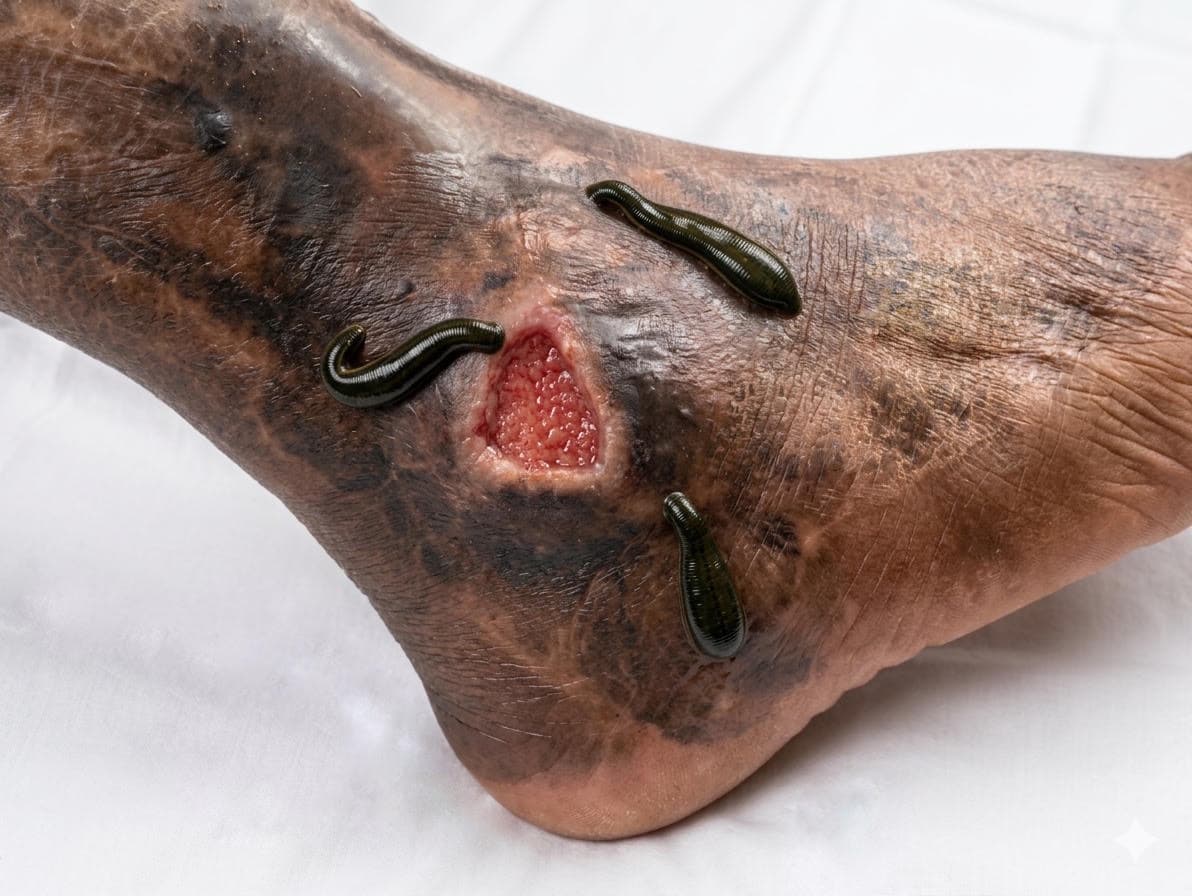
Image placeholder

Hero Banner

Treatment Overview

Ayurveda considers Vrana (wound) management one of the most advanced branches of surgery described by Acharya Sushruta. Rather than relying on a single dressing or medicine, Ayurvedic wound care follows a structured approach that addresses every stage of healing—from removing unhealthy tissue to stimulating healthy granulation and finally minimising scarring.

Classical texts describe Shashti Upakrama (60 wound management measures), many of which correspond remarkably with modern principles of wound bed preparation, debridement, infection control, exudate management and tissue regeneration.

At AYANA, wound care protocols are individualised according to:

  • Cause of wound
  • Stage of healing
  • Presence of infection
  • Amount of unhealthy tissue
  • Blood circulation
  • Associated medical conditions (such as diabetes or venous disease)
  • Overall health and healing capacity

Modern wound care principles are integrated with authentic Ayurvedic therapies wherever appropriate.

Image placeholder

Treatment Overview

Our Philosophy

Successful wound healing is not simply about applying a dressing.

It requires:

  • Removal of unhealthy tissue
  • Control of infection and inflammation
  • Reduction of oedema
  • Maintenance of an optimal moist wound environment
  • Promotion of healthy granulation tissue
  • Support for epithelialisation
  • Prevention of recurrence

Every wound is therefore managed using an appropriate combination of therapies rather than a single treatment.

Conditions We Manage

Ayurvedic wound care may be helpful in selected patients with:

Chronic Wounds

  • Diabetic foot ulcers
  • Venous ulcers
  • Pressure sores (bed sores)
  • Non-healing traumatic wounds
  • Chronic postoperative wounds

Acute Wounds

  • Clean traumatic wounds
  • Surgical wounds
  • Minor burns
  • Lacerations
  • Abrasions

Infected Wounds

  • Local wound infections
  • Slough-covered wounds
  • Wounds with unhealthy granulation tissue
  • Chronic discharging wounds

Specialised Surgical Wounds

  • Pilonidal wounds
  • Fistula wounds
  • Post Kshara Sutra wounds
  • Post haemorrhoid procedures
  • Sinus wounds

Image placeholder

How Ayurveda Approaches Wound Healing

How Ayurveda Approaches Wound Healing

Instead of treating every wound similarly, Ayurveda identifies the specific factors delaying healing.

Treatment may aim to:

  • Remove necrotic or unhealthy tissue
  • Reduce microbial load
  • Control excessive wound discharge
  • Improve local circulation
  • Reduce inflammation
  • Promote healthy granulation tissue
  • Encourage epithelialisation
  • Reduce excessive scar formation
  • Restore healthy tissue strength

The treatment protocol changes as the wound progresses through different healing stages.

Modern Principles Integrated with Ayurveda

Our wound care follows universally accepted wound healing concepts while applying Ayurvedic therapies where clinically appropriate.

This includes:

Wound assessment

  • Size
  • Depth
  • Tissue type
  • Exudate
  • Infection
  • Surrounding skin
  • Circulation

Wound bed preparation

Removal of factors delaying healing.

Debridement when indicated

May be performed using:

  • Surgical debridement
  • Kshara Karma
  • Herbal wound cleansing
  • Mechanical methods
  • Autolytic support where appropriate

Moisture balance

Maintaining an optimal wound environment without excessive wetness or dryness.

Promotion of tissue regeneration

Using selected Ayurvedic formulations that support healthy granulation and epithelialisation.

Long-term prevention

Addressing the underlying disease to reduce recurrence.

Ayurvedic Therapies That May Be Used

Depending on the wound, treatment may include:

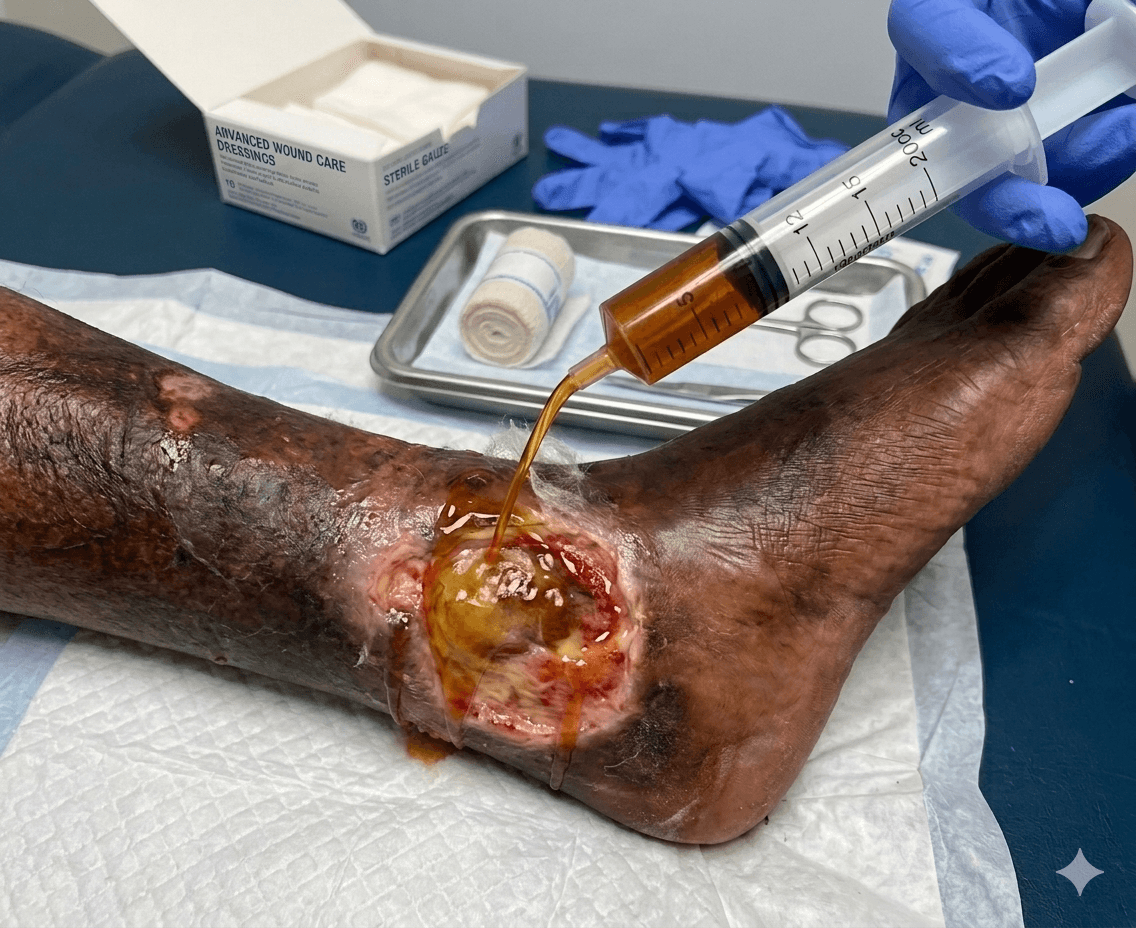
  • Vrana Prakshalana (Medicated wound cleansing)
  • Vrana Lepa (Herbal therapeutic applications)
  • Kshara Karma Selective chemical debridement of unhealthy tissue.
  • Jalaukavacharana Medicinal leech therapy
  • Agnikarma Controlled Cautery
  • Surgical Debridement
  • Medicated Dressings

Internal Ayurvedic Medicines

To support:

  • Tissue healing
  • Digestion (Agni)
  • Dosha balance
  • Immune function
  • Long-term recovery

Benefits

Appropriately selected Ayurvedic wound management may help:

  • Faster wound bed preparation
  • Reduced slough
  • Better control of wound discharge
  • Improved granulation tissue
  • Reduced local inflammation
  • Better wound comfort
  • Healthy epithelialisation
  • Reduced recurrence in selected chronic wounds
  • Comprehensive management of underlying disease

Healing varies depending on the cause, circulation, diabetes control, nutrition and patient compliance.

Who Can Benefit

Patients with:

  • Chronic non-healing ulcers
  • Diabetic wounds
  • Venous ulcers
  • Pressure injuries
  • Postoperative wounds
  • Traumatic wounds
  • Pilonidal wounds
  • Fistula wounds
  • Wounds requiring repeated dressings
  • Individuals seeking integrative wound care alongside conventional management

Treatment Process

1. Consultation

Comprehensive wound assessment including:

  • Medical history
  • Ayurvedic evaluation
  • Wound examination
  • Circulation assessment
  • Associated illnesses
  • Risk factors affecting healing

2. Wound Assessment

Evaluation includes:

  • Size
  • Depth
  • Tissue viability
  • Infection
  • Slough
  • Exudate
  • Pain
  • Healing stage

3. Individualised Treatment Plan

Depending on the wound, the physician selects appropriate combinations of:

  • Cleansing
  • Debridement
  • Dressings
  • Internal medicines
  • Local therapies
  • Adjunctive procedures

4. Regular Dressing & Monitoring

The wound is reviewed periodically to monitor:

  • Reduction in wound size
  • Granulation tissue formation
  • Infection control
  • Healing progress

Treatment is modified as healing progresses.

5. Prevention of Recurrence

Patients receive guidance regarding:

  • Diet
  • Diabetes management
  • Pressure relief
  • Limb elevation (when indicated)
  • Foot care
  • Hygiene
  • Lifestyle measures
  • Long-term follow-up

Duration & Follow-up

Healing time depends upon:

  • Cause of wound
  • Blood supply
  • Infection
  • Diabetes
  • Nutrition
  • Patient compliance
  • Overall health

Acute wounds may heal within weeks, whereas chronic ulcers often require longer-term follow-up and staged treatment.

Frequently Asked Questions

Can Ayurveda treat chronic non-healing wounds?

Many chronic wounds may benefit from Ayurvedic wound care as part of a comprehensive treatment plan. A physician will determine whether the wound is suitable for Ayurvedic management alone or requires combined care with other specialties.

Will the wound dressing be painful?

Most dressings cause minimal discomfort. If debridement is required, the physician will explain the procedure and appropriate measures for comfort.

Is surgery always necessary?

No. Many wounds heal with appropriate wound care alone. However, some wounds require surgical intervention, debridement or other procedures to achieve optimal healing.

Can diabetic patients undergo Ayurvedic wound care?

Yes, provided blood sugar is appropriately managed. Good glycaemic control is essential for successful wound healing.

Will scars disappear completely?

No treatment can guarantee scar-free healing. The goal is to achieve healthy wound closure with the best possible functional and cosmetic outcome.

Book Consultation

Struggling with a Non-Healing Wound?

Early assessment and appropriate wound care can significantly improve healing outcomes and help prevent complications.

Schedule a consultation with our Ayurvedic surgeon for a personalised wound evaluation and treatment plan.

Book Your Consultation Today

Related Blogs

  • Why Some Wounds Fail to Heal
  • Understanding Healthy Granulation Tissue
  • Ayurvedic Principles of Wound Healing
  • Modern Wound Care Meets Sushruta
  • Diabetic Foot Care: Prevention Is Better Than Treatment
  • Managing Venous Leg Ulcers with Integrative Care

Doctor CTA

Advanced Ayurvedic Wound Care, Personalised for Every Patient

At AYANA, wound management is guided by the classical principles of Vrana Chikitsa and adapted to modern clinical practice. Every treatment plan is tailored to the wound type, stage of healing, associated medical conditions and individual healing potential, with a focus on evidence-informed care, safety and long-term recovery.

Book your consultation today to receive a comprehensive wound assessment and a personalised Ayurvedic wound care plan.

Book your consultation today